Tu Diario de Vida
A family's voice, printed in a hardcover book.
- Sector
- Families · Printed books
- Status
- In testing
- Visit the site
- Visit the site (opens in a new tab)
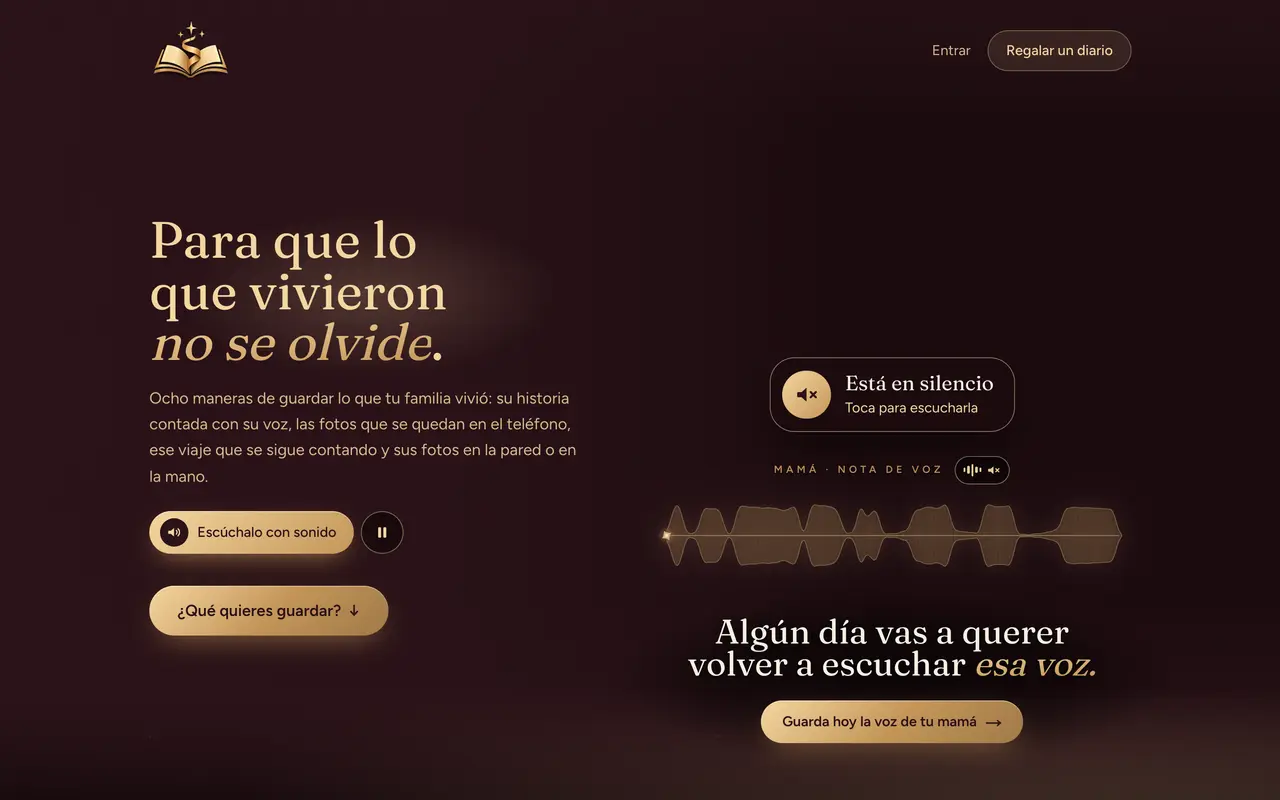
The challenge
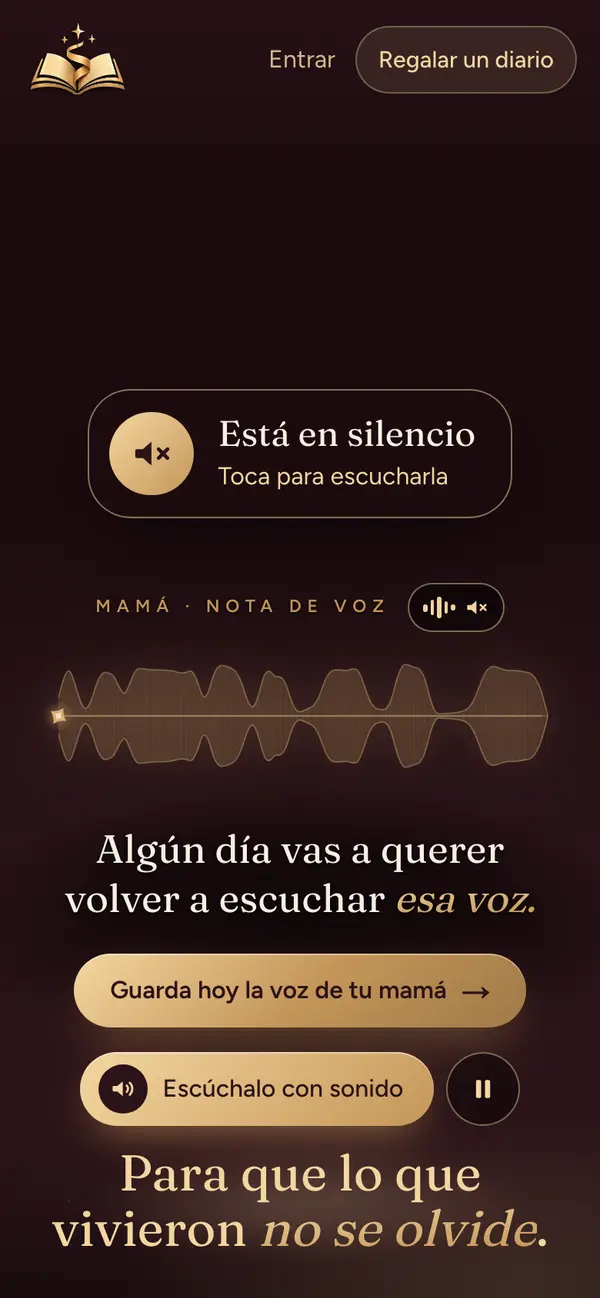
A family's stories live in the memory of the elders, in loose voice notes and in thousands of phone photos. They rarely reach a place where the grandchildren can find them.
The need was a gentle product for people who do not get along with technology. Answer a question by writing or speaking and, in the end, receive a real book, print-ready, where the voice can also be heard.
What we built
- 01
One hundred questions in ten chapters
Answered with text or voice. Everything saves itself, even without signal.
- 02
Voice recorded in the browser
The recording is converted to MP3 on the phone itself, with nothing to install.
- 03
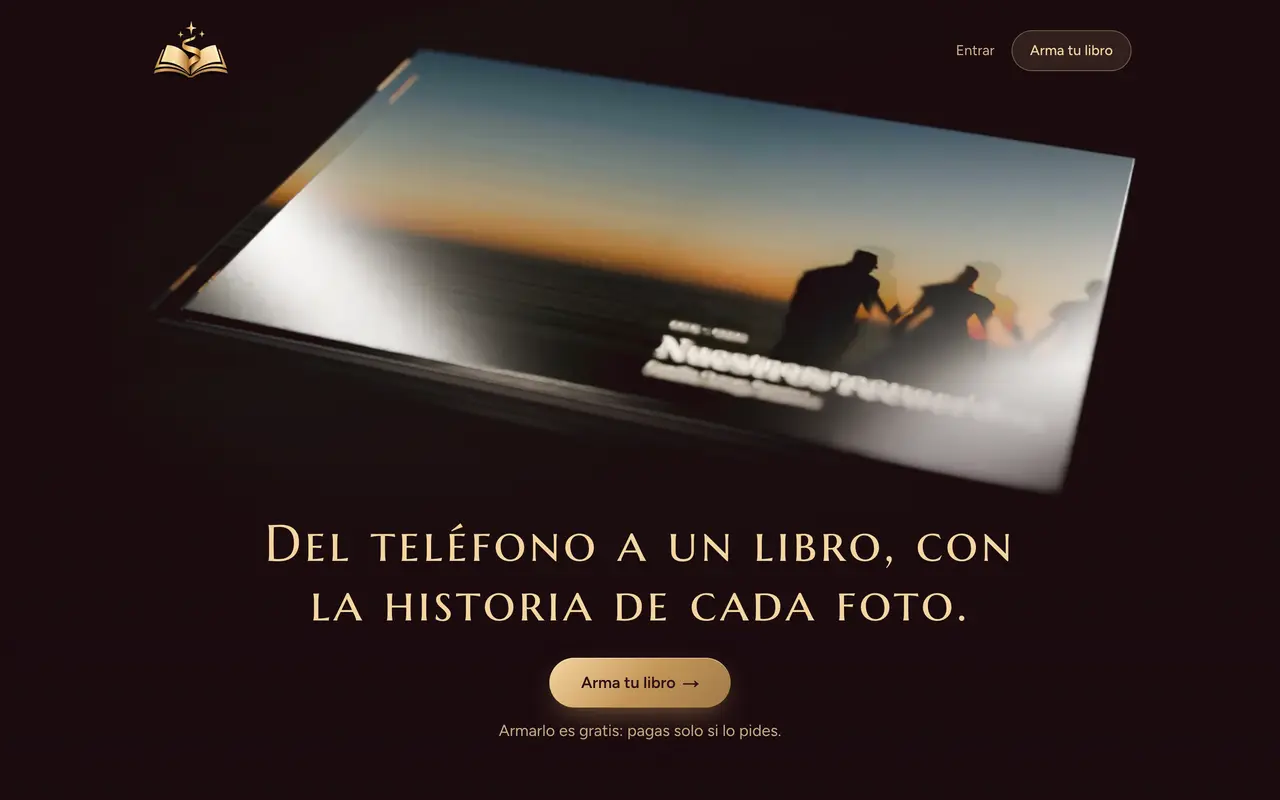
Its own printed book engine
A print-ready PDF, laid out page by page by our own engine.
- 04
QR codes that speak
Vector QR codes printed next to each answer that lead to the recorded voice.
- 05
Memory Book
In-browser face detection to frame every photo; date and place read from the image itself.
- 06
Print on demand and payments
Print orders integrated by API, payments with automatic reconciliation and electronic invoicing.
The live scene
Under the hood
How it is put together, end to end.
01
Browser and phone
- Diary on the phone
- Public life timeline
- Page to listen to the voice
02
Application
- Next.js 16
- React 19
- Strict TypeScript
03
Data
- Supabase Postgres
- Cloudflare R2
- Local queue in IndexedDB
04
External services
- Mercado Pago
- Print on demand via API
- SW Sapien (CFDI)
- Resend
- Cloudflare Turnstile
An engineering detail
From recorded audio to a printed QR code
The voice is recorded and converted to MP3 inside the browser, saved and given a short public address.
When the book is laid out, the engine draws a vector QR code next to each answer, sharp at any size. Whoever leafs through the book years later points their phone at it and hears that voice.
// Simplified illustration
const mp3 = await encodeMp3(recording); // in the browser
const { url } = await saveAudio(mp3); // short public address

// Book engine (print-ready PDF)
const qr = vectorQr(url); // strokes, not pixels
page.text(answer.text, { column: 1 });
page.draw(qr, { x: margin, y: footer, side: 22 }); // millimetres
Repository figures
- 2,145
- automated tests
- 54
- database tables
- 173
- API routes
- 68
- migrations
Counted in the source code on November 23, 2026.
Gallery

Technology
- Next.js 16
- React 19
- Strict TypeScript
- Tailwind CSS 3
- Framer Motion
- Supabase
- Vercel
- Mercado Pago
- Resend
- Cloudflare R2
- Cloudflare Turnstile
- TensorFlow.js
- pdfkit
- Vitest