CheQR
A code that changes within seconds and cannot be fooled.
- Sector
- Workforce attendance · Multi-tenant SaaS
- Status
- Pre-launch
- Visit the site
- Visit the site (opens in a new tab)
The challenge
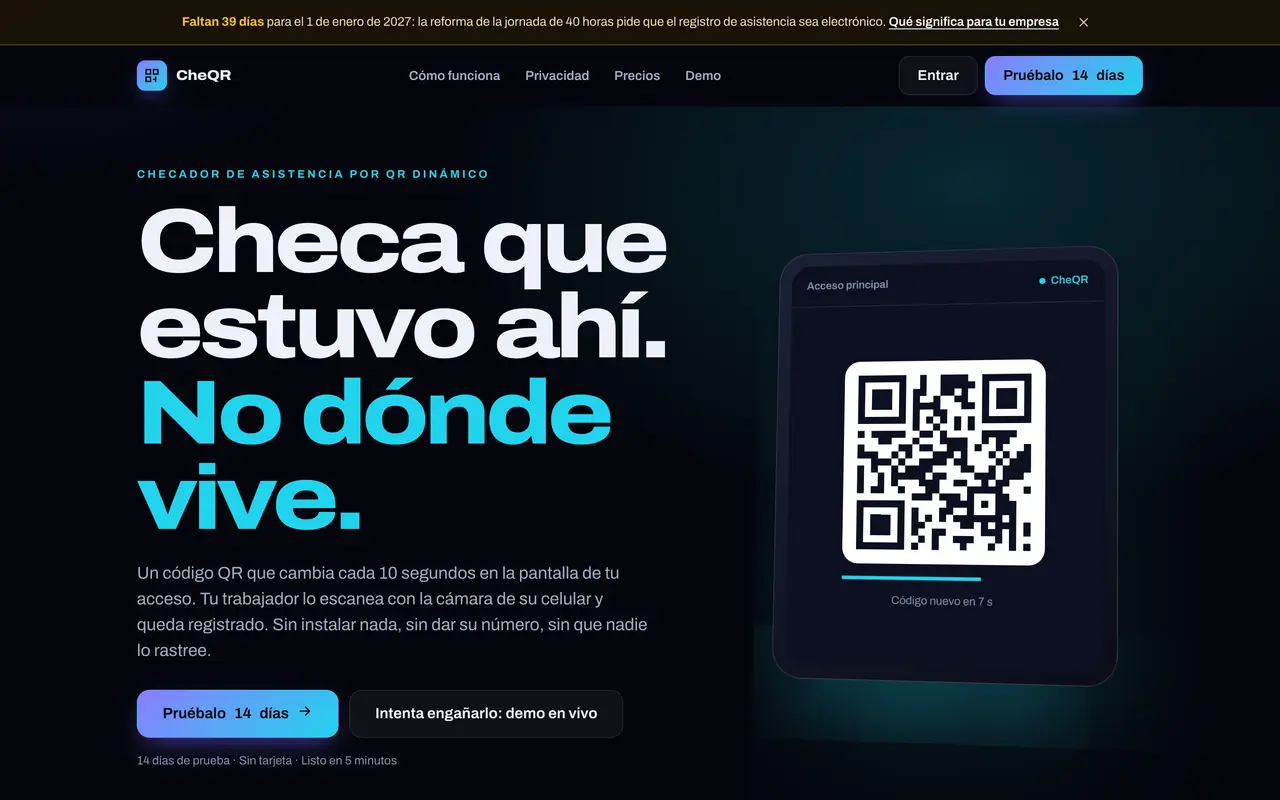
Fingerprint and card time clocks get shared and gamed, and apps that track workers by GPS invade their privacy. On top of that, Mexico's 40-hour work week reform requires electronic attendance records starting January 1, 2027.
The need was a time clock that proved the person was there without knowing where they live, that required nothing to install and kept working when the network goes down.
What we built
- 01
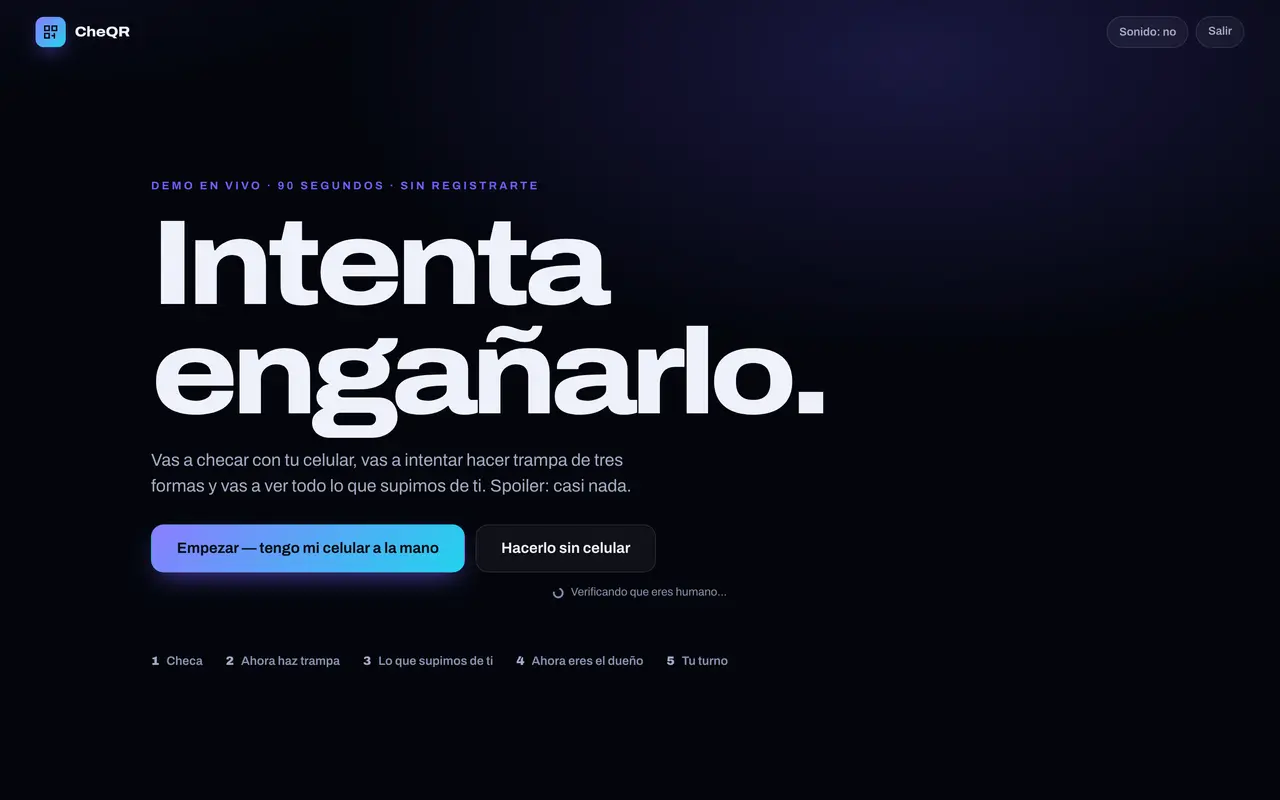
A live, tamper-proof QR code
Signed, single-use and reserved for 90 seconds to the phone that read it. A forwarded photo is useless.
- 02
One phone, one worker
Pairing with a passkey and a PIN with progressive lockout. Nobody checks in for someone else.
- 03
Check in offline
Check-ins are encrypted and stored on the device, then sent automatically when the network returns.
- 04
A labor-law workday engine
Double and triple overtime, holidays and vacation, following Mexico's Federal Labor Law.
- 05
Sealed payroll closings
A chain of seals, a PDF with serial number, public verification and export to CONTPAQi, Excel and CSV.
- 06
White label per company
Each company uses its own colors; contrast adjusts itself so it always reads well.
The live scene
Under the hood
How it is put together, end to end.
01
Browser and phone
- Entrance kiosk
- Worker's phone
- Company dashboard
02
Application
- Next.js 16
- React 19
- TypeScript
- Custom auth (scrypt · WebAuthn)
03
Data
- Supabase Postgres with RLS
- Cloudflare R2
- Encrypted check-ins on device
04
External services
- Stripe
- Resend
- Cloudflare Turnstile
An engineering detail
The signed single-use QR and sealed closings
The code on the screen is not a fixed image. It carries the moment it was issued and a signature only the server can produce. If someone photographs it and forwards it, by the time it arrives it has expired or been used.
When payroll is closed, each period is sealed together with the previous seal. Changing an old record breaks the chain, and it shows.
// Simplified illustration, no real keys or details
const code = `${company}.${window}.${nonce}`;
const signature = hmac(SECRET, code); // only the server signs

// On scan
if (!validSignature(code, signature)) reject();
if (expired(window) || alreadyUsed(nonce)) reject();
reserve(nonce, phone, 90); // single use

// Payroll closing: each seal includes the previous one
seal = sha256(previousSeal + periodSummary);
Repository figures
- 287
- automated tests
- 66
- database tables
- 125
- API routes
- 36
- migrations
Counted in the source code on November 23, 2026.
Gallery
Technology
- Next.js 16
- React 19
- TypeScript
- Supabase Postgres (RLS)
- WebAuthn (passkeys)
- scrypt
- Web Crypto (ECIES P-256 · AES-GCM)
- SHA-256
- WebGL
- Cloudflare R2
- Cloudflare Turnstile
- Stripe
- Resend
- Vercel